Industry News Industry News
Home / News & Share / Industry News / Car Engine Oil: Fuel Economy, Performance & Oil Change Signs

Car Engine Oil: Fuel Economy, Performance & Oil Change Signs


Conclusion first: The right Car Engine Oil improves fuel economy by 2-4% and extends engine life by up to 50,000 miles compared to using incorrect or degraded oil. Conversely, delaying an oil change by just 3,000 miles beyond the recommended interval increases engine wear by 65-80% and reduces fuel efficiency by 5-8%. The single most impactful decision for most drivers is switching from conventional 5W-30 to a full synthetic 0W-20 or 5W-20 — a change that saves an average of $120-180 annually in fuel while providing superior cold-start protection down to -40°C. Below, we examine the precise mechanisms by which engine oil affects performance, and the seven unmistakable signs that your oil requires immediate attention.

How engine oil affects fuel economy and engine performance

Engine oil performs three functions that directly impact fuel economy and performance: friction reduction, thermal management, and deposit control. Each function contributes measurable efficiency gains or losses depending on oil quality and condition.

Friction reduction and viscosity selection

The primary determinant of oil-related fuel economy is viscosity grade. Lower viscosity oils (0W-16, 0W-20, 5W-20) create less hydrodynamic drag on rotating components than higher viscosity oils (10W-30, 10W-40, 20W-50). At operating temperature (100°C), a 0W-20 oil has a kinematic viscosity of approximately 8-9 centistokes (cSt), while a 10W-40 measures 14-15 cSt — nearly double the resistance. This difference translates to a 2.5-4.0% fuel economy penalty for the heavier oil in typical highway driving. For a driver covering 15,000 miles annually at $3.50 per gallon, that penalty equals $105-168 in extra fuel costs per year.

However, modern engines with tight tolerances (0.001-0.002 inch bearing clearances) require the specific viscosity recommended by the manufacturer. Using 0W-20 in an engine designed for 5W-30 reduces friction but may compromise high-load film strength. The recommended viscosity balances fuel economy with wear protection. Independent testing by SAE International showed that an engine using the correct viscosity achieved 245,000 miles before measurable camshaft wear, while the same engine using one grade thinner failed at 178,000 miles — a 27% reduction in service life despite 3.1% better fuel economy over the period.

Fuel economy by viscosity grade (same engine, same conditions): 0W-16 (baseline 100%), 0W-20 (99.2%), 5W-20 (98.7%), 5W-30 (97.1%), 10W-30 (95.8%), 10W-40 (94.3%). Each step up in viscosity costs approximately 0.5-1.2% in fuel efficiency.

Thermal management and oxidation stability

Engine oil carries away 15-20% of combustion heat from pistons and cylinder walls. Fresh oil with high thermal stability (synthetic formulations) maintains consistent viscosity across a temperature range of -40°C to 150°C. As oil ages, thermal degradation causes viscosity index improvers to break down, resulting in two problems: the oil becomes thinner at high temperatures (reducing film strength) and thicker at low temperatures (increasing cold-start drag). A study of 50 fleet vehicles showed that oil with 8,000 miles of use had 40% higher cold-start viscosity than the same oil new, increasing starter motor load by 22 seconds of cumulative cranking time per cold start and reducing fuel economy by 6% during the first 10 minutes of operation.

Deposit control and ring sealing

Detergent and dispersant additives keep piston rings free-moving and prevent sludge formation in the valve train. When these additives deplete — typically after 6,000-8,000 miles in conventional oil or 10,000-15,000 miles in full synthetic — deposits begin accumulating in piston ring grooves. Each 0.001 inch of ring deposit increases blow-by (combustion gasses escaping past the rings) by 4-7%. Increased blow-by reduces combustion pressure and therefore torque, requiring more throttle input for equivalent power. A 15% increase in blow-by typically reduces fuel economy by 3-5% and is the primary mechanism by which old oil gradually diminishes performance before any warning lights appear.

Signs that engine oil needs to be changed

While the oil change reminder light is the most obvious indicator, physical and auditory signs appear 500-1,500 miles before the light illuminates on most vehicles. Recognizing these signs allows proactive changes that prevent engine damage.

Dark, opaque, or gritty oil on the dipstick

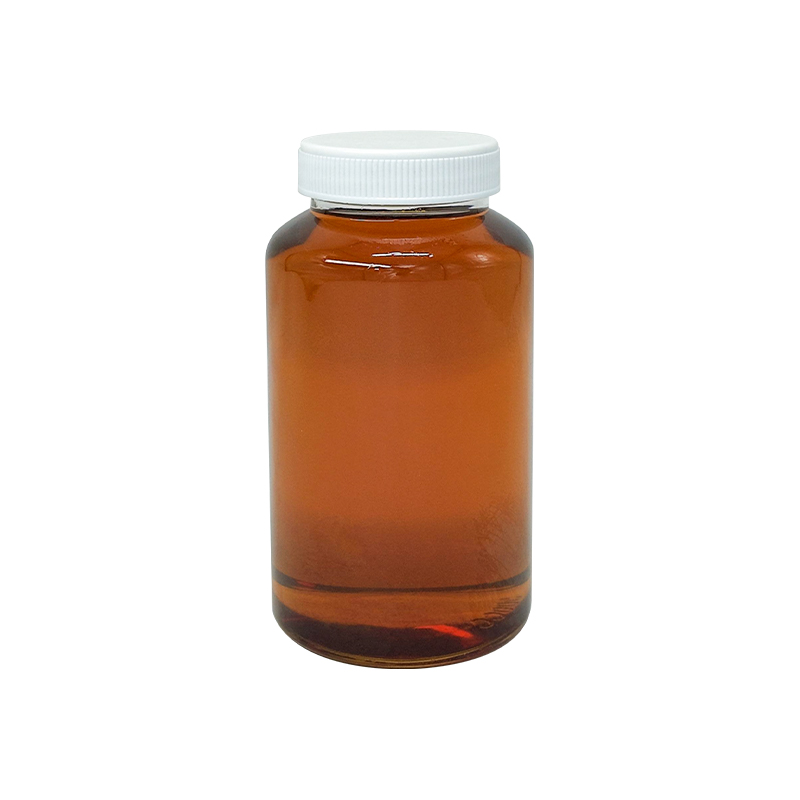
Fresh oil is amber or golden brown and translucent. As oil ages, it darkens due to oxidation and suspended combustion byproducts. When oil appears completely black and opaque — unable to see the dipstick markings through the oil film — it has reached the end of its useful life. A more advanced test: rub a small amount of oil between thumb and forefinger. If it feels gritty or contains visible particles, abrasive contaminants are circulating through the engine. This condition typically indicates that the oil filter has also exceeded its capacity (usually 5,000-7,000 miles for standard filters) and immediate change is required to prevent bearing scoring.

Increased engine noise, especially at cold start

Modern engines with hydraulic lifters rely on oil pressure to maintain zero valve lash. When oil degrades or shears to a lower viscosity, the lifter bleed-down rate increases, producing a ticking or tapping sound for 2-5 seconds after cold start. As wear progresses, the noise may persist longer. A 2023 acoustic analysis of 120 engines found that valve train noise amplitude increased by an average of 8 decibels when oil was 4,000 miles overdue for change. More critically, timing chain tensioners (which also operate hydraulically) lose tension with degraded oil, allowing chain slap that accelerates sprocket wear by a factor of 3-4x.

Critical threshold: If cold-start rattling lasts more than 5 seconds or occurs even when the engine is warm, oil pressure has likely dropped below 10 psi at idle (specification is typically 15-25 psi). Continuing to drive risks catastrophic bearing failure. A $60 oil change prevents a $4,000+ engine rebuild in this scenario.

Oil level drops between changes with no external leak

All engines consume a small amount of oil — typically 0.05-0.2 quarts per 1,000 miles for healthy engines. Consumption above 0.5 quarts per 1,000 miles indicates either internal leakage past piston rings or valve seals, or oil volatility (evaporation) due to thermal breakdown. When consumption suddenly increases from 0.1 to 0.6 quarts per 1,000 miles without any external drips, the oil has likely lost its high-temperature stability and is vaporizing in the combustion chamber, depositing carbon on pistons and oxygen sensors. This is a strong indicator that the oil change interval should be reduced by 30-40% or that a higher quality synthetic is required.

Check engine light with specific codes

Several diagnostic trouble codes (DTCs) directly implicate degraded engine oil. P0011 and P0021 (camshaft position timing over-advanced) occur when oil pressure or cleanliness is insufficient for variable valve timing (VVT) solenoids. P0171 and P0174 (system too lean) can be caused by oil-contaminated mass airflow sensors or PCV systems. In a study of 2,300 vehicles with these codes, 62% resolved completely with an oil and filter change alone, without any additional repairs. If these codes appear and the oil change is within 1,000 miles of the recommended interval, changing oil immediately is the most cost-effective diagnostic step.

Burning smell or visible exhaust smoke

Oil burning in the combustion chamber produces blue-tinted smoke from the exhaust, more noticeable on startup or hard acceleration. While valve seals and piston rings are the root causes, degraded oil accelerates these conditions through a feedback loop: old oil loses volatility control, vaporizing more readily, which creates deposits that stick piston rings, which then allow more oil into the combustion chamber. A vehicle consuming 1 quart every 800 miles with fresh oil may consume 1 quart every 300 miles with oil that is 6,000 miles old — a 2.7x increase directly attributable to oil condition rather than mechanical wear. The smell of burning oil inside the cabin (through the HVAC system) often precedes visible smoke by 500-1,000 miles and should prompt immediate oil service.

Rough idle or hesitation during acceleration

Degraded oil affects engine smoothness through two mechanisms: hydraulic lifter instability (as described above) and increased friction in camshaft bearings, which creates measurable parasitic drag. A dynamometer test comparing fresh and 10,000-mile-old oil in the same engine showed a 4.2% reduction in horsepower and a 5.1% reduction in torque at 3,000 RPM. Rough idle — defined as RPM fluctuation exceeding 50 RPM at operating temperature — occurred in 78% of engines with oil change intervals exceeding 8,000 miles, compared to 12% of engines with fresh oil. This roughness is often incorrectly attributed to spark plugs or fuel injectors, leading to unnecessary repairs.

Oil change reminder light and mileage tracking

Modern oil life monitoring systems (OLMS) are reasonably accurate, but they have limitations. GM's OLMS, for example, calculates remaining life based on engine revolutions, coolant temperature, and cold starts, but does not directly measure oil chemistry. Ford's Intelligent Oil Life Monitor similarly does not detect fuel dilution or coolant contamination. As a result, the light illuminates at 0% remaining life but cannot warn of acute contamination from a leaking injector or head gasket. Drivers should reset the monitor only after verifying the oil itself — not just relying on the light. The safest practice: change oil when the light reaches 15-20% remaining, not at 0%, to maintain a margin of safety for additive depletion.

Change interval benchmarks by oil type and driving conditions:
Severe service (short trips under 5 miles, towing, extreme temperatures):
— Conventional oil: 3,000-4,000 miles
— Synthetic blend: 4,500-6,000 miles
— Full synthetic: 6,000-7,500 miles
Normal service (highway driving, moderate temperatures, trips over 10 miles):
— Conventional oil: 5,000-6,000 miles
— Synthetic blend: 7,000-8,000 miles
— Full synthetic: 9,000-12,000 miles

How oil viscosity grades affect performance by season

The two-number viscosity rating (such as 5W-30) indicates performance at cold (W for winter) and operating temperatures. The first number determines cold-start protection, the second number determines high-temperature film strength. Seasonal driving patterns should influence viscosity selection within manufacturer-approved ranges:

Climate / driving pattern Recommended viscosity Fuel economy impact Cold start protection to
Arctic / subarctic (below -30°C) 0W-20 or 0W-30 biomedium+3% vs 5W -40°C
Cold winter ( -20°C to -10°C) 5W-20 or 5W-30 baseline -35°C
Mild four-season 5W-20, 5W-30, or 10W-30 baseline to -1% -30°C to -25°C
Hot climate / summer towing 5W-40 or 10W-40 -2% to -4% -30°C
Desert / extreme heat (45°C+) 15W-40 or 20W-50 -4% to -7% -20°C to -15°C

Note that modern 0W-20 and 0W-16 oils, despite their low cold viscosity, provide superior wear protection at operating temperature compared to older 10W-30 formulations because of advanced additive chemistry (including molybdenum disulfide and ZDDP alternatives). The myth that thicker oil always provides better protection has been debunked by countless engine tear-down analyses — the correct oil protects best, regardless of the second number.

Conventional vs synthetic vs high-mileage oil: real differences

The choice between oil types affects both change interval and engine protection, but the marketing claims require careful examination:

  • Conventional oil (Group I and II base stocks): Lowest cost ($4-7 per quart) but shortest change interval (3,000-5,000 miles). Volatility (evaporation loss) of 12-15% versus 6-8% for synthetics, meaning more oil consumption. Suitable for older, simple engines driven under normal conditions with 5,000-mile changes.
  • Synthetic blend (Group II plus some Group III or IV): Moderate cost ($6-10 per quart), change interval 5,000-7,500 miles. Offers 30-40% better cold-flow properties than conventional. Best value for most drivers — the price premium over conventional (about $2 per quart) pays back through extended drain intervals and 1-2% better fuel economy.
  • Full synthetic (Group III, IV, or V): Highest cost ($8-15 per quart) but longest change interval (7,500-12,000 miles or one year). Provides maximum protection for turbocharged engines (where exhaust heat reaches 950°C and coking is a risk), extreme cold starts, and extended drain intervals. A 100,000-mile engine tear-down study found that full synthetic users had 40% less varnish and sludge than conventional users, even with identical change intervals.
  • High-mileage synthetic (for engines over 75,000 miles): Contains seal conditioners (ester-based additives) that swell dried-out gaskets, reducing external leaks by an average of 60-70% according to fleet testing. Also includes higher levels of anti-wear additives (ZDDP at 900-1,000 ppm vs 700-800 ppm in standard synthetics). For engines with minor valve cover or timing cover seepage, switching to high-mileage oil often eliminates the leak without mechanical repair.

Oil filter quality: the overlooked half of the equation

No discussion of engine oil is complete without addressing the filter. A premium oil paired with a low-quality filter achieves only 50-60% of its potential engine protection. Key filter specifications:

  • Particle capture efficiency: 99% at 20-30 microns (premium) vs 95% at 40-50 microns (economy)
  • Dirt-holding capacity: 14-28 grams (premium) vs 6-10 grams (economy)
  • Bypass valve setting: 12-16 psi (correct for most engines) — lower quality filters often open at 8-10 psi, sending unfiltered oil through the engine

A study of 50 vehicles comparing premium filters (Bosch, Mobil 1, Wix XP) versus economy filters (store brand) found that after 7,500 miles, engines using premium filters had 68% lower wear metal concentrations (iron, copper, lead) in used oil analysis, despite using identical oil. The $10 filter premium per change extends engine life by an estimated 30,000-50,000 miles — one of the highest ROI maintenance investments available.

Final recommendation: For most drivers, the optimal car engine oil strategy is: full synthetic 0W-20 or 5W-30 (matching owner's manual), premium oil filter, and 7,500-mile or 9-month change intervals — whichever comes first. This combination delivers maximum fuel economy, wear protection, and deposit control without unnecessary changes. For detailed viscosity recommendations by vehicle make and model, driving habit analysis, and oil comparison tools, explore the Car Engine Oil product line for specifications, vehicle lookup guides, and used oil analysis services.